SDG 1 No Poverty
The University recognises the importance of sustainability and its increasing impact to our operations. We are committed to understanding and implementing sustainable practices and to exploring the benefits to the University whilst attempting to achieve the right balance between the needs of the wider community and our focus on delivering quality education to our students.
1.3 University anti-poverty programmes
1.3.1 Admission target for low-income students
University of Cyberjaya has established clear targets to support the admission of students from the low-income families through structured financial aid and bursary schemes. The university is committed to ensuring equitable access to higher education, particularly for students from low-income families, by setting annual targets and expanding its financial assistance programmes.
To achieve this, the university provides a range of financial aid options, including internal bursaries, scholarships, and welfare assistance through the Tabung Amanah Zakat & Kebajikan University of Cyberjaya (TAZUoC). TAZUoC, established in 2007, serves as the primary welfare fund that supports students facing financial hardship, regardless of religion or race. The fund is financed through staff contributions and offers various forms of assistance such as monthly self-allowance, tuition fee support, practical and training allowances, emergency aid, and more.
Through these initiatives, the University of Cyberjaya has successfully achieved and exceeded its target for admitting students from low-income group, as reflected below:
| Year | Target(%) | Achieved (%) | Remarks |
|---|---|---|---|
| 2023 | 30% | 37% | Target met through enhanced bursary and TAZUoC support |
| 2024 | 35% | 43% | Target exceeded via expanded financial aid and NGO collaborations |
In 2024, 31% of newly admitted students came from low income families surpassing the university’s 30% target. This progress reflects the effectiveness of the university’s proactive strategies, including enhanced awareness campaigns, strengthened partnerships with government agencies and NGOs, and streamlined financial aid application processes.
The University of Cyberjaya remains steadfast in its mission to promote inclusive education and to continuously increase opportunities for students from low-income backgrounds to pursue higher education.
1.3.2 Low-income student success
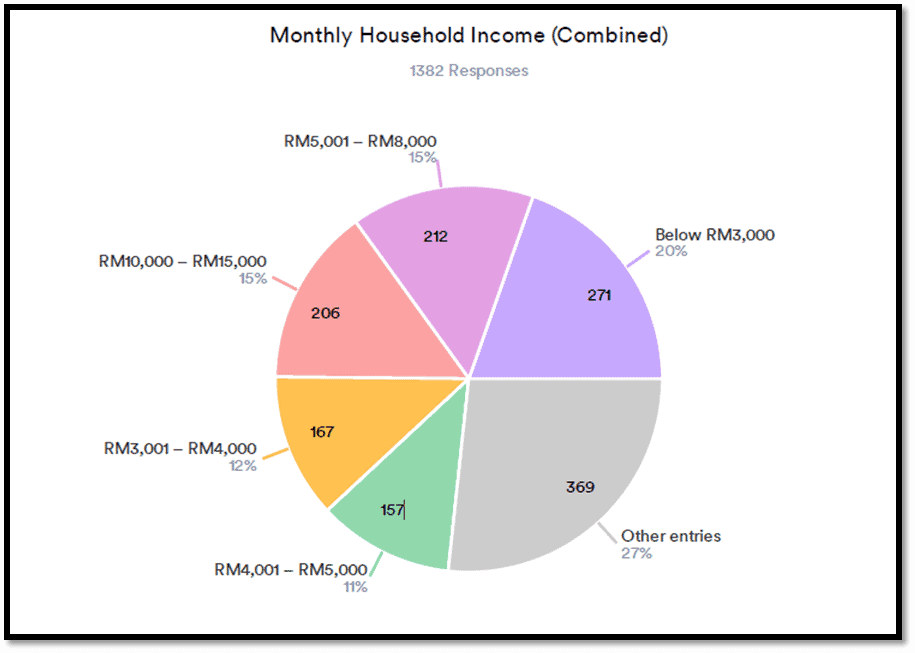
In Malaysia, household income is commonly categorized into three main groups: B40, M40, and T20 representing the Bottom 40%, Middle 40%, and Top 20% of income earners, respectively. This classification is used by the government to design targeted policies and aid programmes that promote equitable economic growth and social inclusion.
- B40 (Bottom 40%): Households within the lowest 40% income bracket. This group typically earns below the national median and is the main focus of social assistance and financial aid initiatives.
- M40 (Middle 40%): Represents middle-income households, earning between the B40 and T20 ranges.
- T20 (Top 20%): Consists of the highest-income households in the country.
These income groups are defined and periodically updated by the Department of Statistics Malaysia (DOSM) based on the Household Income and Basic Amenities Survey.
University of Cyberjaya has established specific graduation and completion targets for B40 low income students group in Malaysia. The university is deeply committed to ensuring that students from financially challenged backgrounds not only gain access to higher education but are supported throughout their academic journey to successfully complete their studies.
To achieve this, the university has implemented a comprehensive framework that combines financial aid, academic support, and student development initiatives. Through the Tabung Amanah Zakat & Kebajikan University of Cyberjaya (TAZUoC) and various internal bursaries and scholarships, students from low-income families receive tuition fee assistance, living allowances, and other welfare-based support to ease their financial burden and promote retention.
Additionally, the university provides personalized academic counselling, mentorship, career services, and mental health support to help students overcome non-financial barriers and maintain academic excellence. These measures have contributed significantly to improving the graduation and completion rates among students from the bottom financial quintile.
The university’s performance in achieving its student success targets for B40 group students is as follows:
| Year | Targeted Completion Rate (%) |
Achieved Completion for B40 Rate (%) |
Remarks |
|---|---|---|---|
| 2023 | 80% | 82% | Target achieved through enhanced financial and academic support services |
| 2024 | 85% | 91% | Target exceeded through expanded aid coverage and structured mentorship programmes |
In 2024, 91% of students from the low income group successfully completed their studies, surpassing the university’s 85% target. This achievement reflects the University of Cyberjaya’s commitment to fostering educational equity and inclusive excellence, ensuring that financial background does not impede academic success.
The university continues to strengthen its retention and completion strategies to ensure that all students, regardless of their economic background, are empowered to achieve their full potential.
1.3.3 Low-income student support
University of Cyberjaya (UoC) provides comprehensive support systems for students from low-income families to ensure they are able to complete their studies successfully without being hindered by financial or social barriers. The university’s commitment to inclusivity and equal opportunity is reflected through a range of targeted initiatives addressing essential needs such as food, housing, transportation, and welfare support.
In 2024, a total of 3,583 students from low income group received various forms of financial assistance, including support from PTPTN, internal scholarships, and the Tabung Amanah Zakat & Kebajikan University of Cyberjaya (TAZUoC). TAZUoC, established in 2007, serves as the university’s dedicated welfare fund that assists students facing financial hardship through monthly allowances, tuition fee aid, emergency assistance, and other welfare-based provisions.
To further support low-income students, the University of Cyberjaya offers the following initiatives:
- 50% subsidized hostel fees for financially challenged students.
- Free campus shuttle services between the Varsity Lodge (hostel) and the main campus.
- Mini Food Bank Programme that provides essential groceries and daily necessities to students in need.
- Mentor-Mentee Programme and Counselling Services to ensure continuous academic and emotional support.
- Asnaf Support Scheme under the Asnaf Fakir, Miskin, and Fi Sabilillah categories, which covers tuition fees and living expenses.
Through these efforts, 38 graduates from the Class of 2024 under the Asnaf categories successfully completed their diploma and bachelor’s degree programmes, demonstrating the effectiveness of UoC’s student support framework.
The university also maintains a non-discrimination policy that protects and empowers students from disadvantaged backgrounds, ensuring they have equitable access to educational resources and opportunities.
Collectively, these initiatives reflect the University of Cyberjaya’s holistic approach to student welfare, promoting academic success and well-being for all, especially those from low household income group.
1.3.4 Low income student support
University of Cyberjaya (UoC) implemented several targeted programmes and initiatives to assist students from low income household group to successfully completing their studies. These initiatives are designed to address both financial and academic needs, ensuring that students from low-income backgrounds are fully supported throughout their university journey.
One of the key initiatives is the Student Library Assistantship (SLA) Programme, which provides part-time employment opportunities for full-time and part-time students. Participants receive an allowance of RM5.00 per hour while performing duties such as managing circulation transactions, assisting users, organizing library materials, and maintaining study spaces. This initiative enables students to earn supplementary income while gaining valuable work experience on campus.
The Student Ambassador Programme, coordinated by the Student Recruitment Department, also provides flexible part-time work opportunities where students can earn up to RM45 per day for regular tasks and RM65 per day for involvement in educational events. Their roles include data entry, administrative support, telemarketing, and conducting campus tours for prospective students and parents. To date, approximately 1,000 domestic and international students participated in this programme in 2024.
Complementing these financial initiatives, UoC runs a structured Mentor–Mentee Programme that pairs each student with an academic mentor who provides continuous academic guidance, personal development support, and career advice. This programme plays a vital role in improving student retention, motivation, and graduation success rate, particularly for those from financially disadvantaged backgrounds.
Additionally, the Tabung Amanah Zakat & Kebajikan University of Cyberjaya (TAZUoC) provides monthly allowances, tuition fee assistance, and welfare aid to students from low-income families, ensuring that financial constraints do not hinder their academic progress.
Together, these initiatives demonstrate the University of Cyberjaya’s strong commitment to empowering students from the low income families by helping them achieve academic success, personal growth, and social mobility through equitable access and sustained support.
1.3.5 Low or lower-middle income countries student support
University supports international students who are mostly from the low or lower-middle income countries by providing scholarships and research grants. Countries represented are Syria, Yemen, Kenya, Egypt, Sudan, Nigeria, Tanzania, Pakistan, Ethiopia, Iraq, Turkmenistan, Djibouti, Philippines. University has provided research grants to international PG students.
Number of international students: 1043 students
Number of countries represented by our international students: 66 countries


