University of Cyberjaya (UoC) defines sustainability as a term that encompasses all aspects of ethical business practices by addressing relevant issues responsibly and profitably.
The University recognises the importance of sustainability and its increasing impact to our operations. We are committed to understanding and implementing sustainable practices and to exploring the benefits to the University whilst attempting to achieve the right balance between the needs of the wider community and our focus on delivering quality education to our students.
1.4 Community anti-poverty programmes
THE Impact Rankings 2027 · SDG 1 No Poverty · Indicator 1.4
How the University of Cyberjaya meets THE Impact Rankings indicator 1.4 · Data year 2025
Poverty is not only a lack of income. It is also a lack of access to food, health care, education and the chance to earn a living. The University of Cyberjaya works with the communities around it on all of these: helping local micro-entrepreneurs build their businesses, taking food, health care, education and emergency relief to people who need them, and putting its research in front of the people who make poverty policy.
This page explains, question by question, how the University meets the four parts of THE Impact Rankings indicator 1.4, Community anti-poverty programmes. For each question we set out what we do, how it meets the question's objective, and the programmes behind it. Each initiative links to the SDG Impact Report where it is described in full.
20+
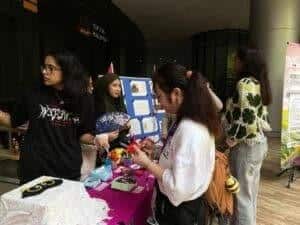
local micro-businesses given free space at campus bazaars
22
community outreach programmes for disadvantaged groups
1,700+
people reached with food, health care, education and relief
711
low-income households studied to inform national poverty policy
1.4.1 Helping Local Start-ups Build Sustainable Businesses
THE QUESTION
Does your university as a body provide assistance in the local community supporting the start-up of financially and socially sustainable businesses through relevant education or resources? (e.g. mentorship programmes, training workshops, access to university facilities)
OUR ANSWER
Yes, through all three. In 2025 the University ran the free UoC Community Enterprise Programme for local B40 micro-entrepreneurs, with training workshops and a faculty mentor for each participant, ran a free Sustainable Business Enterprise Workshop for the public, and gave more than 20 local micro-businesses access to its campus at monthly bazaars.
How we meet this question
Small businesses are one of the main routes out of poverty for low-income households, but many fail for lack of basic business skills. The UoC Community Enterprise Programme gives local B40 micro-entrepreneurs those skills free of charge. In 2025 participants received training in business planning, digital marketing, food-safety certification and bookkeeping, the practical foundations of a business that can sustain a family. Each participant was mentored by a lecturer from the University's faculties, who helped them apply what they learned to their own business.
The University also opens its facilities and community to local businesses. More than 20 local micro-businesses were given space at the University's monthly campus bazaars, giving them access to the University's students and staff as customers. And it runs free public workshops on running a business responsibly: on 8 December 2025, during SDG Week, the Sustainable Business Enterprise Workshop showed 64 participants how a social enterprise can earn a sustainable income while creating social and environmental value.
Start-up assistance for local businesses, 2025
Programme
What it provides
Who it serves
UoC Community Enterprise Programme
Free training in business planning, digital marketing, food-safety certification and bookkeeping, with a faculty mentor
Local B40 micro-entrepreneurs
Sustainable Business Enterprise Workshop
Free workshop on building a financially sustainable social enterprise
64 participants, open to the public
Monthly campus bazaars
Free space to sell to the student and staff community
2025 · Faculty of Business and Technology and faculty mentors
SDG 1 · No PovertySDG 8 · Decent Work and Economic Growth
Free training for local B40 micro-entrepreneurs in business planning, digital marketing, food-safety certification and bookkeeping, with a faculty lecturer mentoring each participant.
Does your university as a body provide financial assistance to the local community assisting the start-up of financially and socially sustainable businesses?
OUR ANSWER
Yes. In 2025 the University gave seed grants of up to RM2,000 to 12 participants in the UoC Community Enterprise Programme, and waived the rental cost of campus bazaar stalls for more than 20 local micro-businesses.
How we meet this question
Training is more useful when a new business can afford to put it into practice. In 2025 the University gave seed grants of up to RM2,000 to 12 participants in the UoC Community Enterprise Programme, to buy equipment, stock or certification that their business plans identified as the next step.
The University also saves local micro-businesses the cost of premises. More than 20 businesses received rent-free stalls at the University's monthly campus bazaars, giving them a market of thousands of students and staff with no rental cost. For a micro-business, a free stall in front of a ready customer base is often worth more than a small loan, and it lets owners test products and build regular customers.
Financial assistance for local start-ups, 2025
Type of assistance
Detail
Reach
Seed grants
Up to RM2,000 per business for equipment, stock or certification
12 Community Enterprise participants
Rent-free campus space
Stalls at monthly campus bazaars with no rental charge
Does your university as a body organise training or programmes to improve access to basic services for all?
OUR ANSWER
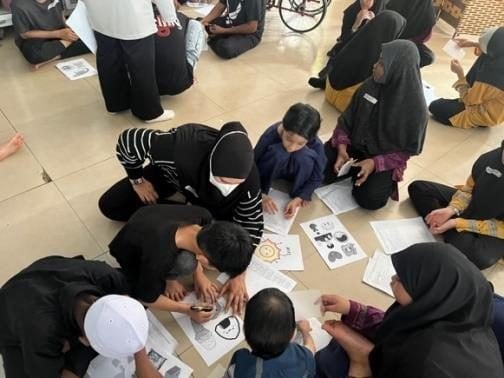
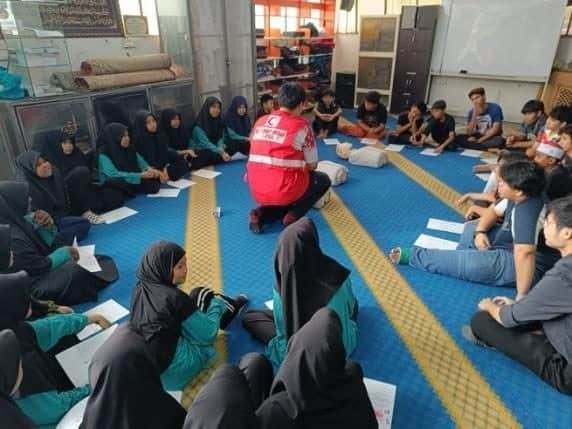
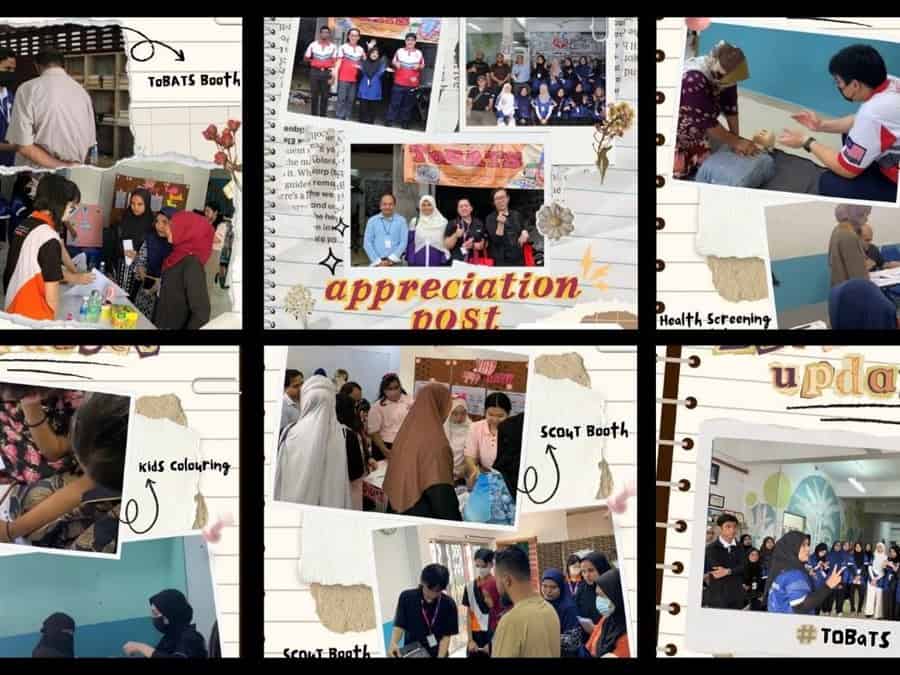
Yes. In 2025 the University organised 22 outreach programmes and training for disadvantaged groups, reaching more than 1,700 people with food, hygiene, health care, education, life-saving skills and emergency relief.
How we meet this question
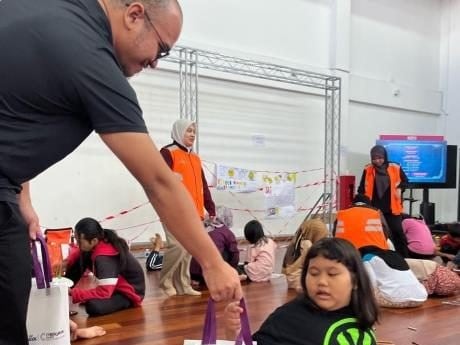
The University's students and staff take basic services to people who struggle to reach them: people sleeping rough, children in care, refugees, persons with disabilities, villagers far from health services, and families who have lost their homes. Most programmes are delivered through the compulsory community-service courses Young Mercy and Environmental Volunteerism, with a partner organisation that knows the community and its needs.
Programmes are delivered directly, by students and staff on the ground, and indirectly, through partners such as Jabatan Kebajikan Masyarakat, Kechara Food Bank and Lembaga Zakat Selangor's agents. The table shows how they cover each of the basic services the question names.
Programmes by basic service, 2025
Basic service
Programmes
Reach
Food
Care packs for homeless people in Chow Kit; street food distribution with Kechara Soup Kitchen; surplus food rescued for Rumah Kasih Harmoni
60 homeless people in Chow Kit; more than 120 people sleeping rough; two weeks of rations for a charity home
Hygiene and emergency relief
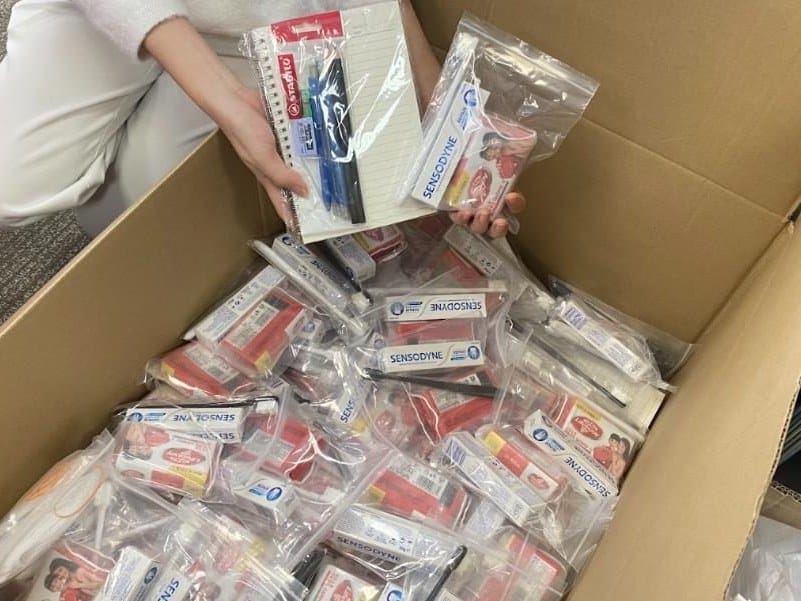
Hygiene kits and psychological first aid after the Putra Heights fire; flood-relief kits for Kelantan
305 displaced residents; flood-affected families
Health care
Health screening for persons with disabilities; community health programmes in Sepang and Muar; medicine-safety education for refugees
46 persons with disabilities; residents of five communities; 141 refugees
Education
Zakat-matched back-to-school kits; EduHub learning centre; first aid and CPR training
71 asnaf children and caregivers; 850 students; 55 children
Economic resources
Community Enterprise Programme, seed grants and free bazaar stalls
24 November 2025 · Persatuan Insan Istimewa Cheras Selangor
SDG 3 · Good Health and Well-beingSDG 10 · Reduced Inequalities
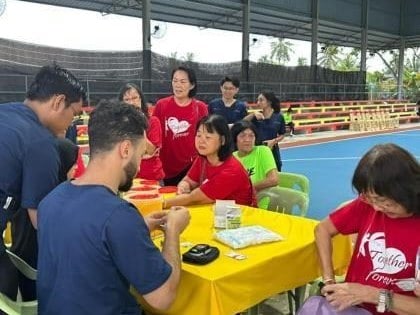
Free health screening and lifestyle advice for 46 persons with disabilities and their caregivers, who often find it hard to reach routine health checks.
12 April 2025 · Jabatan Kebajikan Masyarakat, MyCARE-KEMAS
SDG 1 · No PovertySDG 3 · Good Health and Well-beingSDG 11 · Sustainable Cities and Communities
With the welfare department, students distributed hygiene kits to 305 residents displaced by the Putra Heights gas pipeline fire, while MyCARE-KEMAS provided psychological first aid.
23 May 2025 · Kechara Food Bank, Rumah Kasih Harmoni
SDG 1 · No PovertySDG 2 · Zero HungerSDG 12 · Responsible Consumption and Production
Students sorted surplus supermarket groceries at Kechara Food Bank and delivered two weeks of dry rations to Rumah Kasih Harmoni, a charity home in Sungai Buloh.
Does your university as a body participate in policy making at local, regional, national and/or global level to implement programmes and policies to end poverty in all its dimensions?
OUR ANSWER
Yes. In 2025 the University informed poverty policy at national, state and district level: a study of 711 low-income households in Sabah went to KPLB and state authorities, our experts advised KPWKM and LPPKN, and district health offices used our community findings to plan programmes for low-income households.
How we meet this question
Poverty has many dimensions, from income and education to health and family well-being, and the University contributes to policy on several of them. Nationally and regionally, Prof Dr Rosnah Ismail of the Faculty of Psychology and Social Sciences led a study of 711 low-income households in Kudat, Sabah, with Universiti Malaysia Sabah. Funded by an RM100,000 Ministry of Higher Education grant and backed by the Ministry of Rural and Regional Development (KPLB), it produced a 13-chapter report to federal and state authorities recommending programmes tailored to each area, functional literacy and the extension of bee-keeping to island communities.
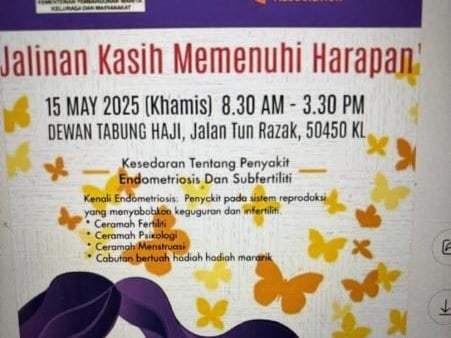
Prof Rosnah also contributed expertise on endometriosis and family well-being to the Ministry of Women, Family and Community Development (KPWKM) and the National Population and Family Development Board (LPPKN), with the aim of reducing the health and financial burden on women and low-income families. Locally, Year 3 MBBS Community Medicine students presented their 2025 findings on childhood injuries and children's gadget use in Kampung Baru Sepang Jaya and Kampung Parit Bakar, Muar, to the Sepang and Muar district health offices, which used them to plan community health programmes for low-income households.
Policy contributions on poverty, 2025
Level
Contribution
Policy body
National and state
Kudat household poverty study: 13-chapter report with recommendations
KPLB; Sabah state authorities
National
Expert input on women's health and family well-being
KPWKM; LPPKN
District
Community health findings used to plan programmes for low-income households
Listening to Kudat: a household poverty study for KPLB
September 2023 – September 2025 · KPLB, MOHE, Universiti Malaysia Sabah
SDG 1 · No PovertySDG 10 · Reduced InequalitiesSDG 16 · Peace, Justice and Strong Institutions
The survey found that 41.7% of heads of household had never attended school and only 25.6% of households could save, and showed that take-up of Kudat's 16 poverty programmes was concentrated in three. Its recommendations give planners the evidence to tailor programmes to each area.
SDG 3 · Good Health and Well-beingSDG 5 · Gender Equality
A forum on endometriosis and family well-being that put women's experiences in front of the ministry and the national population board, informing support that reduces the burden on low-income families.
SDG 1 · No PovertySDG 3 · Good Health and Well-being
Surveys of 249 guardians on childhood injuries at home and of parents on children's gadget use gave the district health offices evidence to plan programmes for low-income households.
The University publishes an Impact Report for each of the 17 Sustainable Development Goals. Each one sets out our commitments, key facts and the initiatives behind them, and is the source for the references on this page.