

Shaping Tomorrow: The Future of the Allied Health Profession in Malaysia

Allied health professionals are becoming a strategic engine of national health transformation as Malaysia’s healthcare system enters a defining decade. The country is facing a sharper and more complex health burden: a steady rise in non-communicable diseases and mental health needs, the re-emergence of infectious diseases, and a population living longer than ever before.
By 2040, more than one in five Malaysians will be over 65. The growing burden of chronic disease, disability, rehabilitation demand, and mental health challenges will reshape how care is organised, funded, and delivered. In this new reality, allied health professionals are not simply supporting the system. They are becoming a strategic engine of national health transformation.

At the same time, Malaysians are more health literate, digitally connected, and actively involved in their own care decisions. Healthcare is no longer confined to hospitals. It is moving into homes, communities, and virtual spaces. This shift places allied health professionals at the centre of prevention, recovery, and continuity of care. These changes align closely with national reform under the 13th Malaysia Plan, which emphasises integrated care, digital health, prevention, and sustainable financing. For these reforms to succeed, Malaysia needs a future ready allied health workforce that is digitally fluent, adaptable, and deeply embedded in communities.
“Malaysia’s health reforms require a workforce that is both clinically strong and prepared for the future,” says Pn L Mageswary, Director of the Allied Health Sciences Division at the Ministry of Health. “Allied health professionals must be recognised as co designers of new care models, not just service providers.”
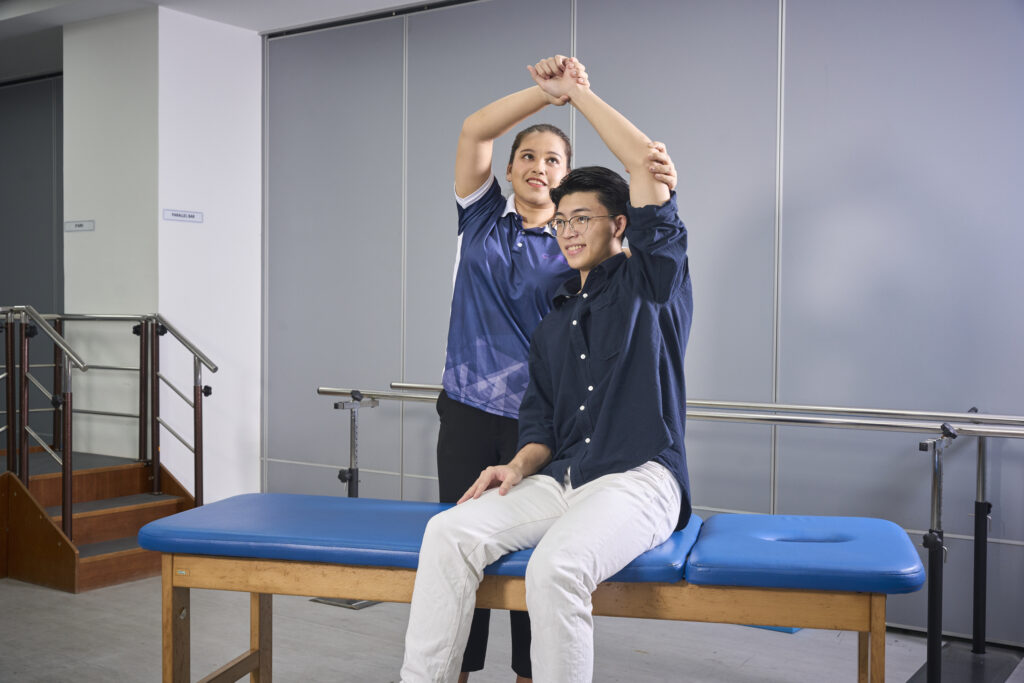
The shift is already visible. Physiotherapists are using tele rehabilitation and wearable devices to monitor progress remotely and adjust exercise programmes earlier. Dietitians are applying continuous glucose monitoring data and personalised app-based plans to strengthen preventive care and follow up between visits. Radiographers now work alongside AI-enabled imaging systems that improve workflow and support quality assurance. Counsellors and psychologists are delivering hybrid services that expand access and continuity. This is not future speculation. It is today’s emerging reality.

Beyond technology, allied health is also moving upstream into the social and environmental determinants of health. Sedentary lifestyles, ageing friendly urban design, climate-related disease patterns, food systems, and mental health stigma demand community based, preventive leadership. In this evolving model, allied health professionals are becoming systems thinkers, not only clinicians.
“Climate change and environmental stressors are already altering disease patterns and increasing the demand for care,” Pn Mageswary notes. “In the years ahead, allied health professionals will be among the key frontline actors turning planetary health risks into practical action for communities.”
Technology is accelerating this shift by extending care beyond traditional settings. In respiratory care, physiotherapists and rehab teams can use portable airway clearance devices such as LEGA Ace, a handheld percussion and vibration tool, to support secretion clearance outside the clinic. The physiotherapist’s role expands from delivering every step hands-on to deciding who is suitable, supervising safe use, training patients or caregivers, and tracking outcomes over time. Across professions, the common direction is clear: from episodic interventions to ongoing coaching, data informed decisions, and stronger continuity of care.
Technology can amplify reach and precision, but only if education, governance, and workforce development evolve in tandem.
At the Faculty of Health, University of Cyberjaya, this challenge is taken seriously. “Universities can no longer afford to train allied health professionals for yesterday’s healthcare system. We must prepare them to lead the system Malaysia is building now,” Professor Dr Phelim Yong Voon Chen, Executive Dean, Faculty of Health, University of Cyberjaya, emphasised.
This means embedding digital health, foresight, planetary health, and leadership into professional training. It means strengthening partnerships between universities, the Ministry of Health, and industry. It means nurturing not only job ready graduates, but system-ready leaders.
Malaysia stands at a strategic crossroads. With aligned national reform, strong policy leadership, and a transformed education pipeline, the allied health profession can become one of the most powerful drivers of healthcare innovation, equity, and resilience in the region.
The future of healthcare will not be built by those who wait for change. It will be built by those prepared to lead it. And the allied health profession is ready to lead.

