SDG 13 Climate Action
The University recognises the importance of sustainability and its increasing impact to our operations. We are committed to understanding and implementing sustainable practices and to exploring the benefits to the University whilst attempting to achieve the right balance between the needs of the wider community and our focus on delivering quality education to our students.
13.3 Environmental education measures
13.3.1 – Local education programmes on climate
University of Cyberjaya (UoC) actively provides and supports local education programmes and campaigns on climate change risks, impacts, mitigation, adaptation, impact reduction, and early warning, in alignment with its sustainability and public health objectives.
- Student Training and Community Engagement
UoC integrates climate disaster awareness and response training into student community engagement activities. Through the Centre for Disaster and Relief Medicine (CDRM), students are trained to assist local communities during natural disasters such as floods, emphasizing preparedness, early warning response, and adaptation measures. These programmes build students’ capacity to respond effectively to climate-induced emergencies while strengthening community resilience.
Click to watch the video: Disaster & Relief Medicine Field Exercise 2024 MBBS.MOV
- Malaysia Launch of the Lancet Countdown 2024 Report
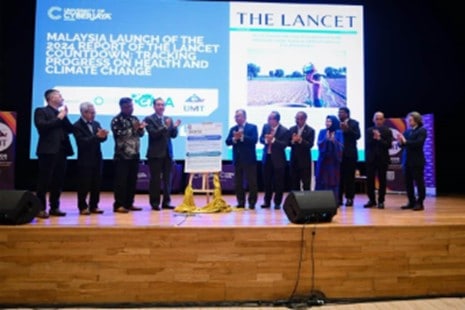
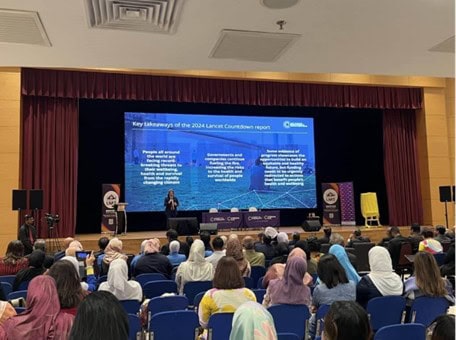
The University of Cyberjaya hosted the Malaysia Launch of the Lancet Countdown 2024 Report, focusing on the intersections of climate change, food security, and health. The event gathered national and international experts, policymakers, and academics to discuss actionable strategies for mitigating and adapting to the health impacts of climate change.
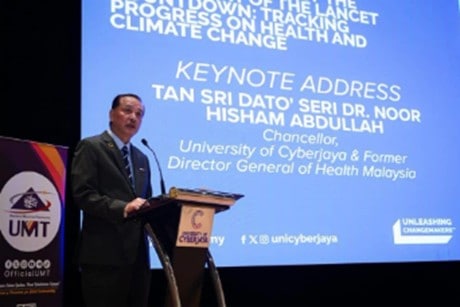
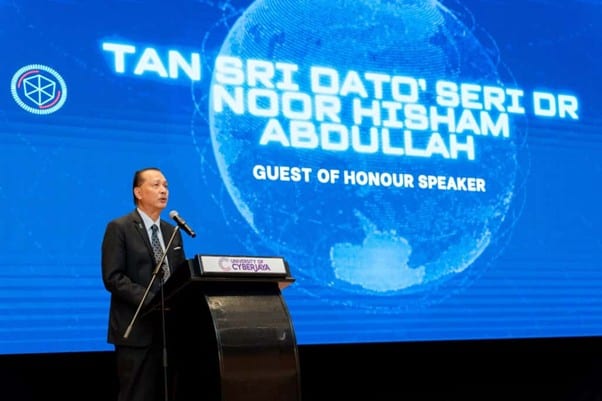
The conference featured a keynote address by Tan Sri Dato’ Seri Dr. Noor Hisham Abdullah, highlighting the urgent need for cross-sector collaboration in addressing climate-related health threats. During the event, a Memorandum of Understanding (MoU) was signed between the University of Cyberjaya, Universiti Malaysia Terengganu, and the Commonwealth Medical Association, reinforcing their shared commitment to climate education, resilience, and public health.
Climate Education and Awareness Initiatives
Following the Lancet Countdown launch, UoC initiated educational programs and awareness campaigns focused on climate change mitigation, adaptation, and impact reduction. These initiatives aim to:
- Raise awareness about climate risks and their effects on human health and the environment.
- Equip students, staff, and local communities with knowledge and tools for sustainable adaptation and resilience.
- Promote interdisciplinary collaboration in climate and health research.
Through these sustained efforts, the University of Cyberjaya plays a pivotal role in advancing local climate education and resilience, contributing to Malaysia’s broader agenda on climate change adaptation and disaster preparedness.
13.3.2 - Climate Action Plan
University of Cyberjaya (UoC) has developed a comprehensive Climate Action Plan (CAP) aimed at achieving carbon neutrality by 2030, demonstrating its long-term commitment to environmental sustainability and climate resilience. This plan serves as a strategic framework that integrates climate action into every aspect of the university’s operations, research, education, and community engagement.
The Climate Action Plan outlines key strategies and measurable targets to reduce greenhouse gas (GHG) emissions, enhance energy efficiency, promote renewable energy adoption, and foster sustainable practices within the university community. It focuses on areas such as energy conservation, waste management, sustainable transportation, water efficiency, green campus development, and climate-focused education. Each area includes specific milestones and timelines to ensure systematic implementation and accountability.
Beyond internal measures, UoC emphasizes collaboration with local governments, industries, and community organizations to address climate change at a broader level. These partnerships support initiatives in climate change mitigation, adaptation, early warning systems, and disaster risk management, ensuring that the university’s efforts extend beyond campus boundaries.
Furthermore, the plan prioritizes research and innovation in climate science, sustainability, and green technology, empowering students and faculty to develop solutions that contribute to Malaysia’s national climate goals and the United Nations Sustainable Development Goals (SDGs). Educational programs, workshops, and outreach campaigns are also embedded in the plan to raise awareness and build capacity among students, staff, and the surrounding community.
Through the Climate Action Plan, the University of Cyberjaya positions itself as a leader in climate responsibility, setting a strong example for higher education institutions in Malaysia. By 2030, UoC aims to not only achieve carbon neutrality but also cultivate a resilient, environmentally conscious community that contributes meaningfully to a sustainable and low-carbon future.
Upload the PDF: University of Cyberjaya Climate Action Plan 2024.pdf
1.3.3 Low-income student support
University of Cyberjaya (UoC) provides comprehensive support systems for students from low-income families to ensure they are able to complete their studies successfully without being hindered by financial or social barriers. The university’s commitment to inclusivity and equal opportunity is reflected through a range of targeted initiatives addressing essential needs such as food, housing, transportation, and welfare support.
In 2024, a total of 3,583 students from low income group received various forms of financial assistance, including support from PTPTN, internal scholarships, and the Tabung Amanah Zakat & Kebajikan University of Cyberjaya (TAZUoC). TAZUoC, established in 2007, serves as the university’s dedicated welfare fund that assists students facing financial hardship through monthly allowances, tuition fee aid, emergency assistance, and other welfare-based provisions.
To further support low-income students, the University of Cyberjaya offers the following initiatives:
- 50% subsidized hostel fees for financially challenged students.
- Free campus shuttle services between the Varsity Lodge (hostel) and the main campus.
- Mini Food Bank Programme that provides essential groceries and daily necessities to students in need.
- Mentor-Mentee Programme and Counselling Services to ensure continuous academic and emotional support.
- Asnaf Support Scheme under the Asnaf Fakir, Miskin, and Fi Sabilillah categories, which covers tuition fees and living expenses.
Through these efforts, 38 graduates from the Class of 2024 under the Asnaf categories successfully completed their diploma and bachelor’s degree programmes, demonstrating the effectiveness of UoC’s student support framework.
The university also maintains a non-discrimination policy that protects and empowers students from disadvantaged backgrounds, ensuring they have equitable access to educational resources and opportunities.
Collectively, these initiatives reflect the University of Cyberjaya’s holistic approach to student welfare, promoting academic success and well-being for all, especially those from low household income group.
13.3.4 - Inform and support government
University of Cyberjaya (UoC) actively supports and collaborates with local and regional governments in initiatives related to climate change disaster risk management, early warning, and monitoring through various programs and partnerships.
- Centre for Disaster and Relief Medicine (CDRM) – Flood Relief Initiative 2024
The University’s Centre for Disaster and Relief Medicine (CDRM) established a dedicated Flood Relief Team to assist local authorities during the major flood disaster in Selangor in December 2024. The team, comprising 6 staff members and 18 student volunteers from the Young Mercy (YM) group, was deployed to Kampung Tengah, Puchong, and Taman Emas, Dengkil, on 22 December 2024. The volunteers carried out domestic cleaning work and provided relief assistance to affected residents.
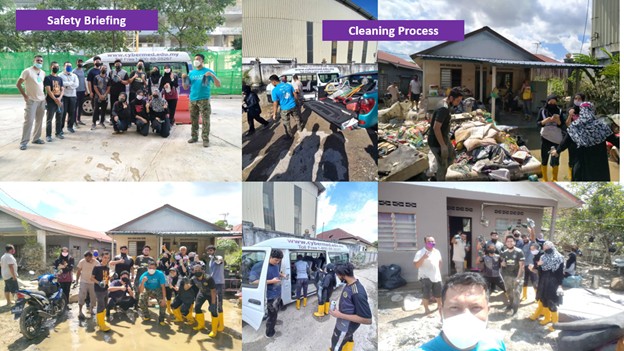
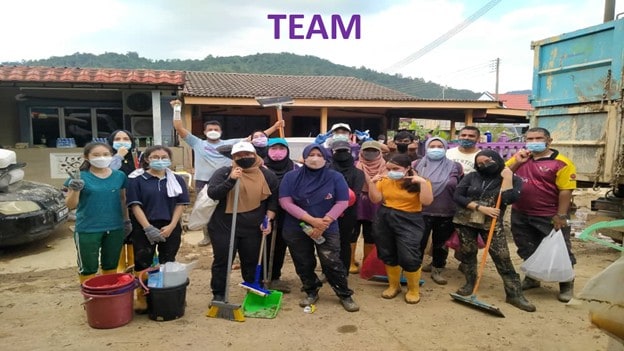
To ensure safety, all volunteers underwent COVID-19 saliva testing prior to deployment, and necessary cleaning and relief equipment were supplied by CDRM-UoC. The university also facilitated donation drives and community engagement to support the affected areas. Through this initiative, UoC contributed directly to local disaster response coordination, working alongside community and government agencies to strengthen early recovery and resilience.
- Selangor State Public Health Conference 2024 – Strengthening Climate and Health Resilience
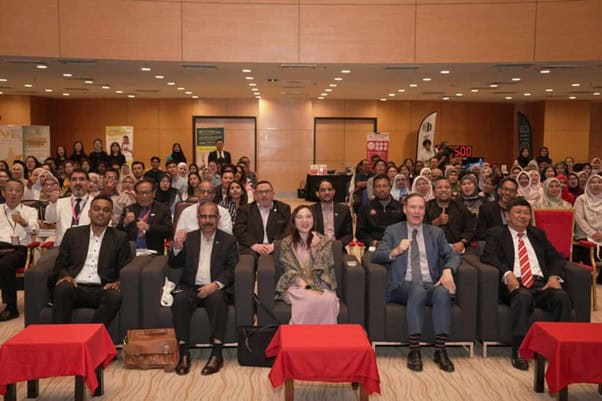
University of Cyberjaya hosted the inaugural Selangor State Public Health Conference 2024, themed “Future-Proofing Health: A Call for Sustainable Healthcare.” The conference brought together healthcare professionals, policymakers, and academics to discuss the intersection of climate change, public health, and disaster preparedness.
The discussions focused on the health impacts of climate change, the need for resilient healthcare infrastructure, and the role of early warning systems in disaster risk reduction. Through this platform, UoC provided scientific expertise and policy insights that support state-level climate adaptation strategies. The university continues to collaborate with local and regional authorities to enhance climate risk monitoring and preparedness, reinforcing its role as a strategic partner in building resilient communities and sustainable public health systems.
13.3.5 – Environmental education collaborates with NGO
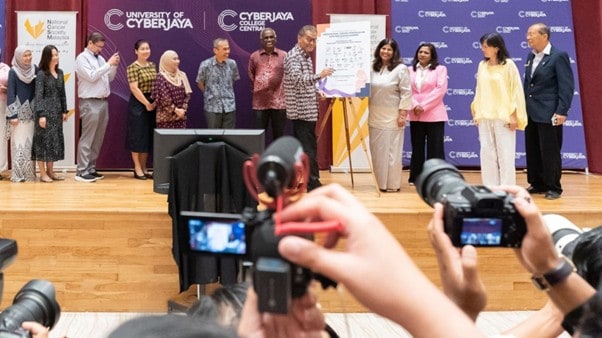
Malaysian Cancer NGOs and Stakeholders Unite on National World Cancer Day 2024, Pledging Equity and Support
University of Cyberjaya hosted the national World Cancer Day event, bringing together over 20 Malaysian cancer NGOs and stakeholders under the theme “Together We Can Do Better.” The event emphasized the importance of equity in cancer care, with Health Minister Datuk Seri Dr. Dzulkefly Ahmad highlighting the government's commitment to supporting innovative partnerships that prioritize equitable access to cancer care for all Malaysians. A significant moment was the Life Insurance Association of Malaysia's pledge to support the National Cancer Society of Malaysia's "Leaving No One Behind" initiative, which aims to eliminate cervical cancer through widespread HPV vaccination efforts. Additionally, the university signed a Memorandum of Understanding with the National Cancer Society of Malaysia to enhance collaboration in cancer research and healthcare innovation, underscoring a shared commitment to advancing cancer care in Malaysia
While the primary focus of this event was on cancer care, it indirectly addressed climate adaptation by promoting public health initiatives that can enhance community resilience. The university's collaboration with NGOs and government agencies in this context demonstrates its role in supporting health equity and community well-being, which are integral components of climate adaptation strategies. By fostering partnerships that aim to reduce health disparities and improve access to care, the university contributes to building resilient communities capable of adapting to various health challenges, including those exacerbated by climate change.