THE Impact Rankings 2027 · SDG 17 Partnerships for the Goals · Indicator 17.2
How the University of Cyberjaya meets THE Impact Rankings indicator 17.2 · Data year 2025
No university can deliver the Sustainable Development Goals alone. In 2025, the University of Cyberjaya worked with 72 partners, from the World Health Organization and national ministries to district health offices, NGOs, companies, schools and fellow universities, on every one of the first sixteen goals.
This page explains, question by question, how that work meets the five parts of THE Impact Rankings indicator 17.2, Relationships to support the goals. For each question we set out what we do, how it meets the question’s objective, and a summary of the initiatives behind it. Each initiative links to the SDG Impact Report where it is described in full.
72
partners across SDGs 1 to 16
5
policy partnerships, from the WHO to district health offices
4
international SDG datasets we contributed to
27
NGOs and community organisations we worked with
How to read this page: Each section quotes THE’s question, gives our answer, explains how our work meets it, and summarises the initiatives behind it. “Read more” points to the page of the SDG Impact Report where each initiative is described in full.
17.2.1 Shaping SDG Policy with Government and NGOs
THE QUESTION
Does your university have direct involvement in, or input into, national government or regional non-government organisations’ SDG policy development, including identifying problems and challenges, developing policies and strategies, modelling likely futures with and without interventions, monitoring and reporting on interventions, and enabling adaptive management?
OUR ANSWER
Yes. In 2025 University experts worked directly with a United Nations agency, two national ministries, a national statutory board, a national regulator and two district health offices on policy for SDGs 1, 3, 5 and 9.
How we meet this question
Our input into policy comes from the same place as our teaching: health and social science research carried out with, and for, the communities that policy is meant to serve. In 2025 that input reached every level of government. At the global level, a University transfusion medicine consultant was appointed to the World Health Organization’s advisory group on blood safety. Nationally, a University-led study of 711 low-income households in Sabah gave the Ministry of Rural and Regional Development (KPLB) evidence on which poverty programmes work, and our psychology experts contributed to policy discussions at the Ministry of Women, Family and Community Development (KPWKM) and the National Population and Family Development Board (LPPKN). At district level, findings from our medical students’ community research are used by the Sepang and Muar district health offices to plan their programmes.
Together, these partnerships cover every stage of the policy cycle that the question describes, from identifying problems to adapting programmes once they are running. The table below shows how.
Stage of policy development
How the University contributes
Example
Identifying problems and challenges
Household and community surveys that measure needs directly
711 low-income households surveyed in Kudat, Sabah; health-needs surveys of more than 800 parents and residents in Sepang and Muar
Developing policies and strategies
Recommendations and expert input to ministries and international bodies
13-chapter policy report to KPLB; WHO advisory group on blood policy; expert input to KPWKM and LPPKN
Modelling futures with and without interventions
Comparing outcomes where programmes have and have not reached
Kudat study compared households reached by the honey-bee programme with Banggi Island, where it was never extended
Monitoring and reporting on interventions
Contributing data to national and global monitoring
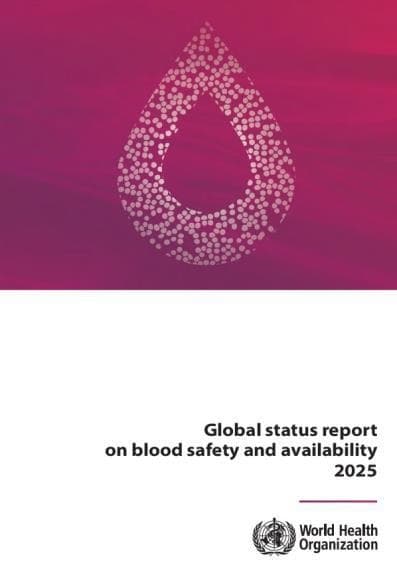
WHO Global Status Report on Blood Safety and Availability 2025; joint post-market surveillance study with the Medical Device Authority
Enabling adaptive management
Findings fed back so programmes can change course
District health offices use our community findings in planning; WHO guidance helps countries adapt their blood systems
Advising the World Health Organization on blood safety
From 14 September 2025 · World Health Organization SDG 3 · SDG 9
Dr Noryati Abu Amin, transfusion medicine consultant and University academic, was appointed to WHO’s Advisory Group on Blood Regulation, Availability and Safety (AG-BRAS) for 2025 to 2027. She helps shape the policy frameworks and technical guidance WHO gives its Member States, including preparedness for crises requiring mass transfusion, and is a named contributor to WHO’s Global Status Report on Blood Safety and Availability 2025.
Evidence on poverty for the Ministry of Rural and Regional Development
September 2023 – September 2025 · KPLB, MOHE, Universiti Malaysia Sabah SDG 1 · SDG 10 · SDG 16
Funded by an RM100,000 Ministry of Higher Education grant and backed by KPLB, Prof Dr Rosnah Ismail led a study of 711 low-income households in Central Kudat, Matunggong and Banggi Island. Its 13-chapter report went to federal and state authorities, recommending programmes tailored to each area, functional literacy and the extension of bee-keeping to island communities.
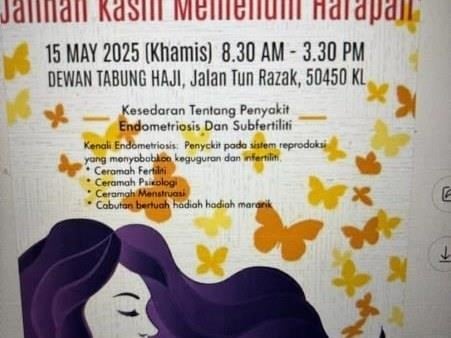
Prof Dr Rosnah Ismail contributed subject-matter expertise to KPWKM and LPPKN on endometriosis and family well-being, and helped lead the ‘Jalinan Kasih Memenuhi Harapan’ forum, which put women’s experiences of the condition in front of the ministry, the national population board, health professionals and families.
Community health findings for the Sepang and Muar district health offices
January – August 2025 · Pejabat Kesihatan Daerah Sepang and Muar SDG 3 · SDG 5
Every third-year medical student researches a community’s health needs before designing a programme with the local health services. In 2025, studies of childhood injuries at home, children’s gadget use and smoking in Sepang and Muar surveyed hundreds of parents and residents. The findings were shared with, and taken into account by, the district health offices in planning their own programmes.
29 September and 7 October 2025 · Medical Device Authority, Ministry of Health SDG 3 · SDG 9 · SDG 16
The Centre of Biomedical Engineering met the national regulator to set up joint research on medical device policy, and hosted MDA’s Medical Device Awareness Programme for about 180 students, staff and industry representatives. The two have agreed on a joint study of post-market surveillance among private hospitals that will inform the regulator’s guidance.
Does your university as a body initiate and participate in cross-sectoral dialogue about the SDGs, e.g. conferences involving government and NGOs?
OUR ANSWER
Yes. In 2025 the University initiated or co-hosted dialogues that brought government, NGOs, industry, health professionals and communities together on SDGs 1, 3, 4, 5, 9, 10 and 11, and ran its own SDG Week.
How we meet this question
Many of the problems the SDGs describe cannot be solved by any one sector. A tobacco-control programme needs the district office, the town council, the clinic and the school; a disaster response needs the welfare department, community groups and volunteers. The University’s role is often to convene: to bring those parties into the same room, give them evidence to discuss, and agree what each will do next.
In 2025 these dialogues ranged from a national forum on endometriosis with two government bodies, an NGO and two universities, to a town-wide anti-smoking day in Parit Jawa that brought together six local organisations. The University’s own SDG Week, held from 8 to 10 December 2025, added a climate workshop with an international partner, an industry-run biofuel collection and a student-led forum on humanitarian issues.
‘Jalinan Kasih Memenuhi Harapan’: a national forum on endometriosis
15 May 2025 · KPWKM, LPPKN, MyEndosis, UTAR, health professionals SDG 3 · SDG 5
A forum at Dewan Tabung Haji, Kuala Lumpur, that brought a government ministry, the national population board, a patient NGO, two universities, clinicians and families together to discuss diagnosis delays, support for women and the role of families and employers.
2025 · National Cancer Society Malaysia, government, health professionals SDG 3
Hosted with the National Cancer Society Malaysia, the conference brought NGO, government, health-professional and academic voices together on tobacco control policy and practice in Malaysia.
9 August 2025 · District office, Majlis Perbandaran Muar, Klinik Kesihatan Parit Jawa, World Vision Malaysia SDG 3 · SDG 4 · SDG 10
Medical students brought the town council, the district office, the health clinic, an international NGO and local schools together for a day of anti-smoking activities for 139 residents and pupils, built on their own survey of smoking in the community.
16–18 July 2025 · PERANTIM, medical-technology industry, investors SDG 9
As a strategic partner alongside the government innovation agency PERANTIM, the Centre of Biomedical Engineering brought students’ medical-device innovations to industry and investors; a student-designed infusion monitor won a silver award.
12 April 2025 · Jabatan Kebajikan Masyarakat, MyCARE-KEMAS SDG 1 · SDG 3 · SDG 11
After the Putra Heights gas pipeline fire, University students and the Department of Disaster & Relief Medicine worked with the welfare department and a community organisation at the evacuation centre, supporting 305 displaced residents.
17.2.3 Measuring Progress with International Partners
THE QUESTION
Does your university as a body participate in international collaboration on gathering or measuring data for the SDGs?
OUR ANSWER
Yes. In 2025 University staff and students contributed to four international datasets on blood safety, refugee health, ocean litter and biodiversity.
How we meet this question
Progress on the SDGs can only be measured if someone collects the data. Our contribution happens at two scales. At the global level, our experts contribute to datasets compiled by United Nations agencies: the World Health Organization’s Global Status Report on Blood Safety and Availability 2025, and research funded by the United Nations Population Fund (UNFPA) on the sexual and reproductive health needs of Rohingya refugees.
At the local level, our students act as citizen scientists. Every coastal clean-up weighs and sorts what it collects and uploads the results to Ocean Conservancy’s international Clean Swell database, part of the world’s largest dataset on ocean litter. On Sungai Klang, students record plant and insect species on iNaturalist, adding to a global biodiversity dataset and to our NGO partner’s survey of the site.
WHO Global Status Report on Blood Safety and Availability 2025
2025 · World Health Organization SDG 3
Dr Noryati Abu Amin is a named contributor to WHO’s global report on blood systems, the dataset Member States use to measure progress on safe and sufficient blood supplies.
Measuring the health needs of Rohingya refugees with UNFPA
2025 · United Nations Population Fund SDG 3 · SDG 5 · SDG 10
A UNFPA-funded research grant is measuring the sexual and reproductive health needs of Rohingya refugees in Malaysia, filling a gap in data on one of the country’s most underserved communities.
Ocean litter data for Ocean Conservancy’s Clean Swell
April – December 2025 · Ocean Conservancy, Sustainability Solutions SDG 14
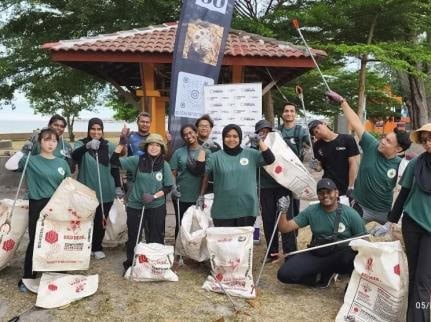
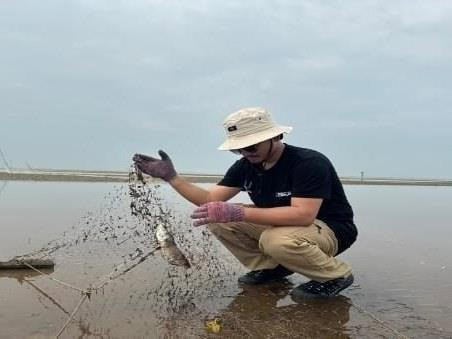
Waste from the University’s coastal clean-ups, more than a tonne in 2025, is weighed, sorted into categories and uploaded to the international coastal clean-up database. At Kuala Langat, the data now gives the council its first year-on-year comparison.
21 November 2025 · iNaturalist, Alliance of River Three SDG 15
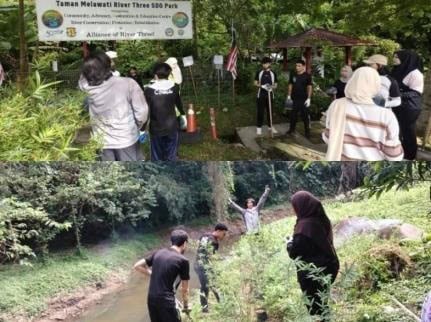
On a biodiversity walk at Taman Melawati, students recorded 14 plant and insect species on iNaturalist, adding to the global platform and to the Alliance of River Three’s ongoing survey of the Sungai Klang site.
Does your university as a body, through international collaboration and research, review comparative approaches and develop international best practice on tackling the SDGs?
OUR ANSWER
Yes. In 2025 the University worked with the WHO, UNFPA, a UK engineering partner, an international climate-education organisation and two Indian institutions to compare approaches and share what works.
How we meet this question
Best practice travels in both directions. We contribute Malaysian expertise to international guidance, most visibly through the World Health Organization, where a University expert advises on blood regulation and contributed to the WHO Expert Committee’s report on pharmaceutical specifications. We also bring proven international methods to Malaysia and test them here: the UK’s Engineering Better Care approach to designing health services, and the IPCC-based Climate Fresk method of teaching climate science.
Each collaboration compares how a problem is tackled in different settings and adapts the best approach. The Engineering Better Care workshop, for example, applied a UK systems-engineering method to service-improvement cases brought by six Malaysian hospitals and health organisations.
WHO technical guidance and the Expert Committee report
2025 · World Health Organization SDG 3 · SDG 9
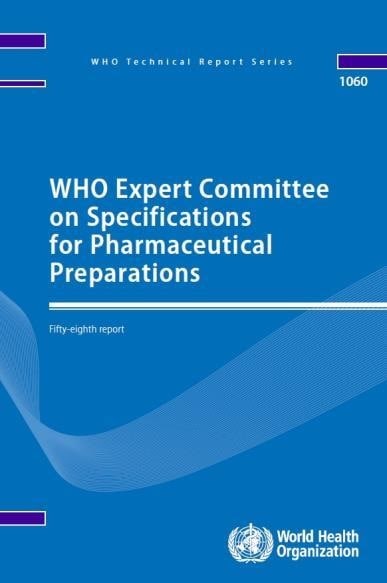
Through the AG-BRAS advisory group, and as a named contributor to the fifty-eighth report of the WHO Expert Committee on Specifications for Pharmaceutical Preparations (Technical Report Series 1060), the University helps set international practice on blood systems and pharmaceutical standards.
22–25 September 2025 · Advance Pact (UK), Centre for Systems in Health Malaysia SDG 3 · SDG 9
A four-day workshop transferred a UK systems-engineering approach to 42 professionals from six Malaysian hospitals and health organisations. Each team left with a redesign plan for one service, and three hospitals have asked for help to implement them.
Climate Fresk: an international method for climate literacy
10 December 2025 · Climate Fresk SDG 4 · SDG 13
A certified facilitator ran the IPCC-based Climate Fresk workshop for 142 participants and 18 school guests. Understanding of the link between greenhouse gases and extreme weather rose from 38% to 81%.
2025 · United Nations Population Fund SDG 3 · SDG 5 · SDG 10
Joint research with UNFPA on the sexual and reproductive health needs of Rohingya refugees, designed to improve the services available to refugee women and families.
Digital health and research collaboration with India
2025 · Sethu Institute of Technology, Sathyabama Institute of Science and Technology SDG 3 · SDG 4 · SDG 9
University experts presented at the International Seminar on Digital Health at Sethu Institute of Technology and mentored 11 researchers from Sathyabama Institute of Science and Technology.
Does your university as a body collaborate with NGOs to tackle the SDGs through (a) student volunteering programmes, (b) research programmes and (c) development of educational resources?
OUR ANSWER
Yes, through all three. In 2025 the University worked with 27 NGOs and community organisations through student volunteering, joint research and shared educational resources.
How we meet this question
Volunteering with NGOs is built into every student’s education. Through the compulsory general-studies courses Young Mercy, Environmental Volunteerism and Al-Quran dan Khidmat Masyarakat, students completed 52 community projects in 2025, most of them with an NGO partner that knows the community well. The strongest partnerships continue beyond a single visit: groups return every semester, and partners such as the Alliance of River Three and IQ70Plus now host the University on a regular basis.
Our NGO partnerships also produce research and resources. With patient groups and river NGOs we carry out joint studies, and with environmental and community organisations we create teaching kits, videos and signs that partners continue to use with their own communities.
2025, from 14 August · Young Lives Malaysia SDG 3 · SDG 10 · SDG 16
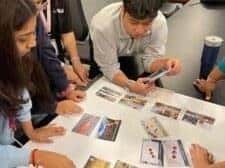
Psychology staff and students supported three Crossroads mental-health and resilience sessions for 790 Myanmar refugees, with 70 facilitators working in small groups.
10 May 2025 · Malaysian Red Crescent, Be Vital, Humanitarian Aid Selangor Society SDG 3 · SDG 10
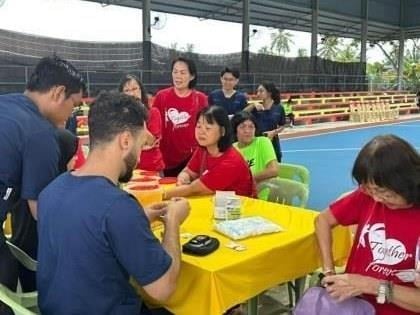
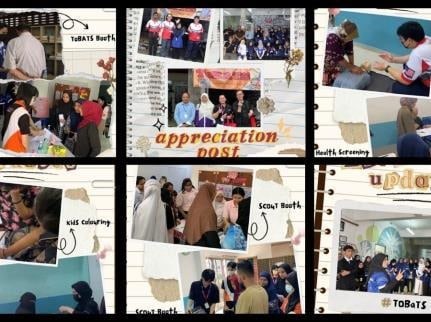
Pharmacy students ran health screening, medicine counselling and first aid with three NGOs for 141 Rohingya refugees, focused on the dangers of fake and unregistered medicines.
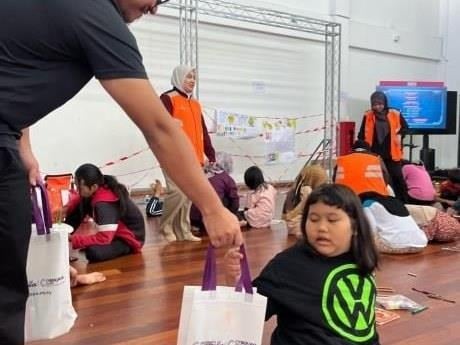
Students distributed food to more than 120 people sleeping rough in Pudu and Brickfields, and rescued surplus supermarket groceries for a charity home.
River biodiversity and water-quality monitoring with ART!
May – November 2025 · Alliance of River Three (ART!) SDG 6 · SDG 15
A biodiversity survey and water-quality monitoring of Sungai Klang at Taman Melawati, now a permanent field site for the University’s Environmental Volunteerism course.
The University publishes an Impact Report for each of the 17 Sustainable Development Goals. Each one sets out our commitments, key facts and the initiatives behind them, and is the source for the “Read more” references on this page.